SUSTAINABILITY IS IN OUR ROOTS
We believe that the best ingredients don't have to come from far away. That is why we work with Belgian sugar beets, a crop that has been part of our landscape for generations. By transforming a local raw material into a premium spirit, we create something unique: an authentic Belgian product that brings together innovation, craftsmanship, and sustainability. Not because we have to, but because it tastes better, feels better, and fits better with who we are.
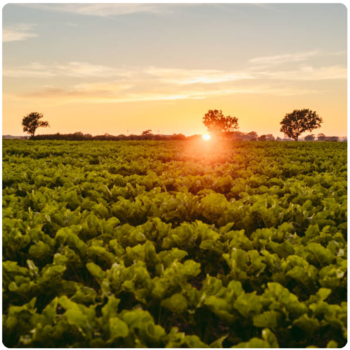
Every bottle of Belroot Spirits starts on Belgian farmland. By producing locally, we limit unnecessary transport kilometers and support farmers from our own region.

Moreover, sugar beets form an important part of sustainable crop rotation. They contribute to healthy soil, make efficient use of natural rainfall, and require little irrigation, unlike sugarcane.
AN INNOVATIVE PROCESS
In the Caribbean, sugar production is synonymous with rum. In the sugar beet belt, we do not share this reflex. Since Tienen is the Belgian sugar capital, we have worked tirelessly towards a unique regional product with rum DNA. The search for the process started from scratch, but by combining ancient writings, knowledge from the rum industry, and innovative insights, we arrived at an innovative process that polishes the image of our sugar beet into liquid gold.
The Raw Material
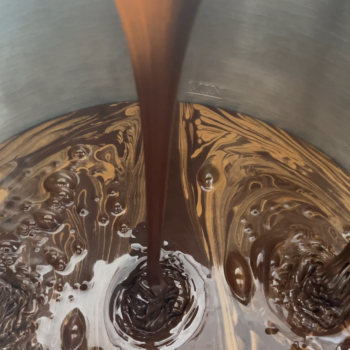
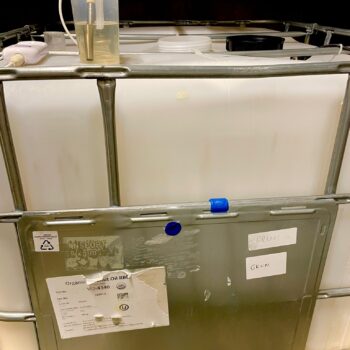
Tienen sugar beet molasses
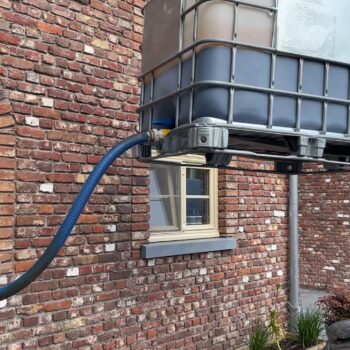
After sugar production, molasses remains: a dark, concentrated raw material rich in complex sugars (45-55%) and aromatic components. We give this local raw material a new purpose.
PRETREATMENT
Essential intermediate steps
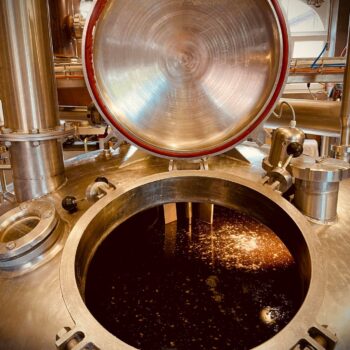
We dilute the beet molasses, adjust the pH with acids specific to beet molasses, neutralize unwanted substances, and release important components with enzymes.
Primary fermentation
Forming the basic character
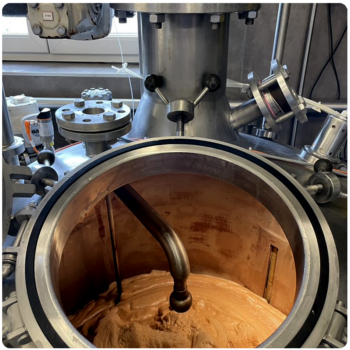
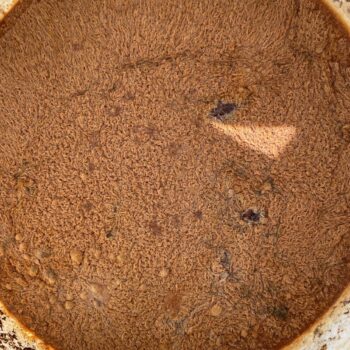
Selected yeasts convert the available sugars into (higher) alcohols and simultaneously create aromatic components that later determine the character of GRUM. The primary fermentation lasts about three weeks and requires robust and complex yeast nutrition.
Secondary fermentation & ester formation
Dead wash
When the primary fermentation is complete, we introduce the complex acidic base from vinasse (dunder - non-bacterially fermented) and vinegar, as is customary in the Jamaican rum industry.
Fruity undertones
When the complex acidic base in secondary fermentation reacts with the alcohols formed during primary fermentation, fruity esters are formed relatively quickly, provided a catalyst is added. These esters are partially masked by the primary aromas of beet molasses. During this phase, it is also possible for short-chain acids to transform into longer-chain acids and form esters again.
First distillation
Maximum yield
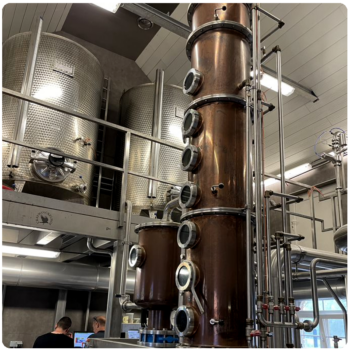
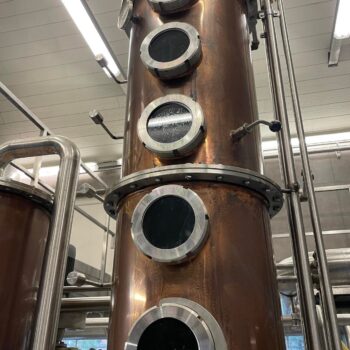
We distill over a column, using a minimum of four plates, and achieve a rough distillate of 89%-90%, retaining all alcohols—those from the foreshots, middle runs, and festoons (fusel/higher alcohols). Under the influence of heat, Maillard reactions with the precursors present create characteristic notes of chocolate, caramel, and subtle tobacco in the distillate. After the rough distillation, vinasse remains in the still (fermented beet molasses without sugars and without alcohols).
TERTIAIRY FEMENTATION (MUCK)
More complex acidic base
By adding bacterial cultures to the vinasse from the rough distillation, more and more complex acids are formed under the influence of time and temperature (bacterial fermentation). It is this acidic base that is used in the fine distillation to control the aromatics of our distillates.
SECOND DISTILLATION
Introduction of muck
During the fine distillation, we introduce a limited amount of muck that can react maximally with the extracted alcohols from the rough distillation to form esters during the final distillation period. This takes place over a column with at least four plates. After carefully separating the foreshots and feints, we obtain aromatic high wines of 91%.
Ageing
Ex-bourbon casks & French oak finish
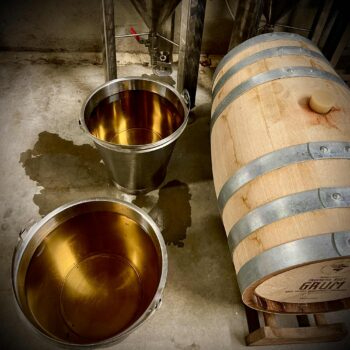
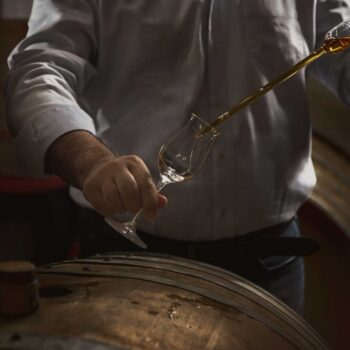
Time does its work. In small casks of charred American oak, GRUM is given the time to develop further. The limited cask size ensures an intense interaction between distillate and wood, while limiting losses due to the Angels' share. Subsequently, a short maturation in French oak provides the final refinement and gives GRUM its distinctive character.
Blending and bottling
Silver, Spiced, Gold & Café
GRUM Silver is our base distillate. All other GRUMs are carefully crafted and ultimately acquire their own unique character.
By adapting Jamaican rum techniques, we achieve an ester profile that is comparable, yet different. That makes our spirits unique. The weighting of the ester profile (number of grams of esters per hectoliter of pure alcohol) is perfectly controllable by adjusting the muck ratios during distillation.
This process is industrially applicable, innovative, and in the final phase of a patent search.